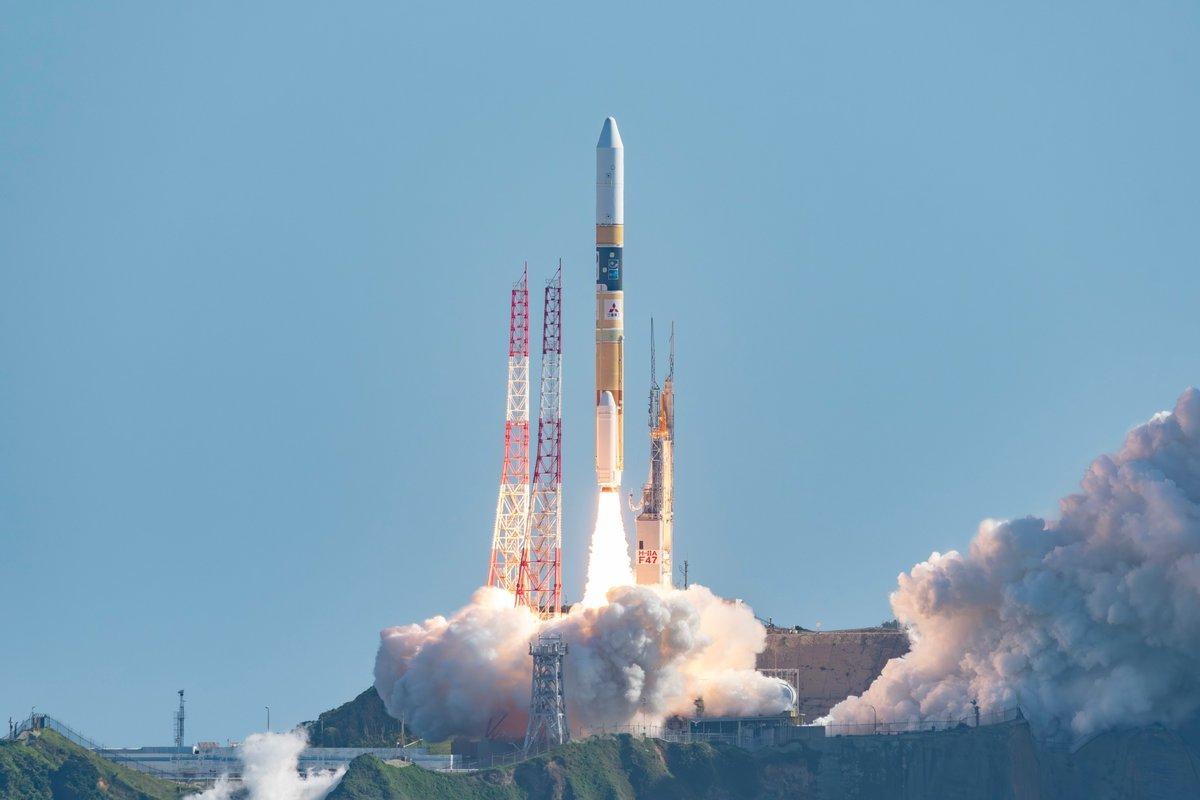
H-IIA 202: QZS-1R
The Quasi-Zenith Satellite System (QZSS) is a three-satellite regional time transfer system and the satellite-based augmentation system for the GPS that would be receivable within Japan. The primary purpose of QZSS is to increase the availability of GPS in Japan's numerous urban canyons, where only satellites at very high elevation can be seen. A secondary function is performance enhancement, increasing the accuracy and reliability of GPS derived navigation solutions. QZS-1R is a replacement satellite for QZS-1 which was launched in 2010.
Mission Data

The launch vehicle successfully inserted its payload(s) into the target orbit(s).
About H-IIA 202
H-IIA (H2A) is an active expendable launch system operated by Mitsubishi Heavy Industries (MHI) for the Japan Aerospace Exploration Agency. The liquid-fueled H-IIA rockets have been used to launch satellites into geostationary orbit, to launch a lunar orbiting spacecraft, and to launch Akatsuki, which studied the planet Venus. Launches occur at the Tanegashima Space Center.
Launch Site
Launch data from Launch Library 2 by The Space Devs.