Vostok-K: Vostok 3
Vostok 3's mission goal was to test human body's ability to function in weightlessness and to test the Vostok 3KA spacecraft for longer flights. They also tested craft-to-craft communications by launching Vostok 4 a day after Vostok 3. Their trajectories brought them approximately 6.5 km from each other and cosmonauts were able to communicate via radio. This also marked the first time more than one crewed craft was orbiting earth at the same time. The spacecraft carried cosmonaut Andriyan Nikolayev to orbit where he orbited Earth 64 times before reentering. The mission lasted for 3 days 22 hours & 28 minutes.
Mission Data
The launch vehicle successfully inserted its payload(s) into the target orbit(s).
About Vostok-K
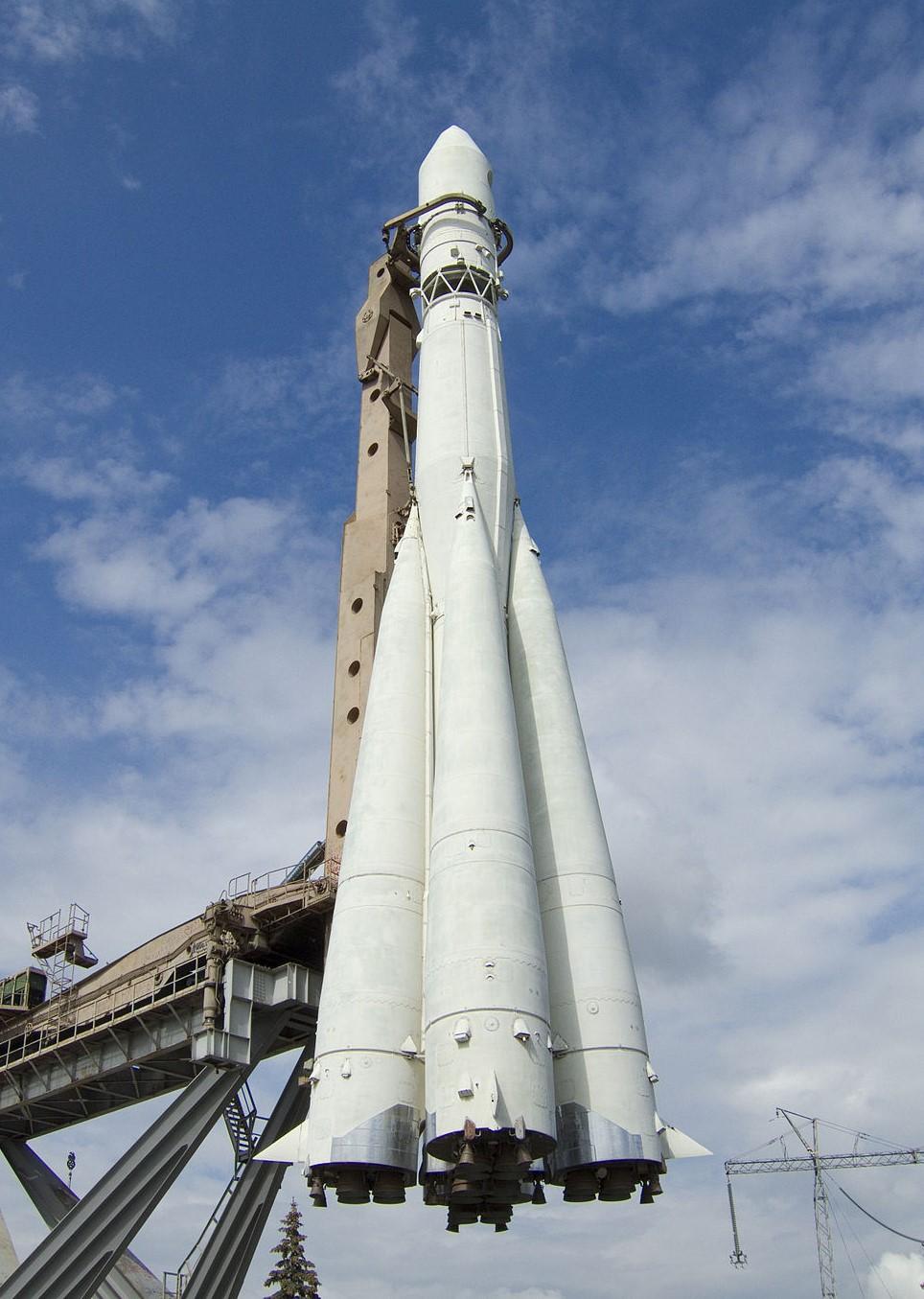
The Vostok-K was an expendable carrier rocket used by the Soviet Union for thirteen launches between 1960 and 1964, six of which were manned. The Vostok-K made its maiden flight on 22 December 1960, three weeks after the retirement of the Vostok-L. The third stage engine failed 425 seconds after launch, and the payload, a Korabl-Sputnik spacecraft, failed to reach orbit. The spacecraft was recovered after landing, and the two dogs aboard the spacecraft survived the flight. On 12 April 1961, a Vostok-K rocket was used to launch Vostok 1, the first manned spaceflight, which made Yuri Gagarin the first human to fly in space.
Launch Site
Launch data from Launch Library 2 by The Space Devs.